

Micro LED displays have emerged as a revolutionary technology in the field of visual display, offering numerous advantages over traditional display technologies such as LCD and OLED. One of the key aspects that define the performance and usability of Micro LED displays is their brightness. In this blog post, I'll delve into what the brightness of Micro LED displays means, its significance, and how it impacts various applications. As a Micro LED display supplier, I have witnessed firsthand the transformative potential of this technology and understand the importance of brightness in different scenarios.

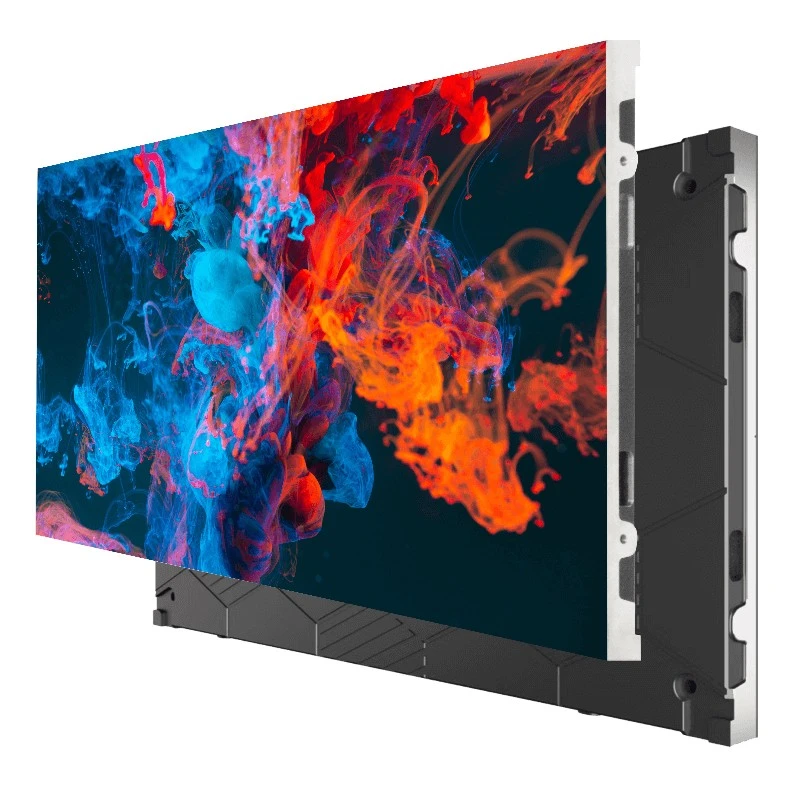
Understanding Brightness in Micro LED Displays
Brightness in the context of displays is typically measured in nits. A nit is a unit of luminance, which refers to the amount of light emitted per unit area in a particular direction. In simpler terms, it tells us how bright a display appears to the human eye. Micro LED displays are capable of achieving extremely high brightness levels, far exceeding those of LCD and OLED displays.
The high brightness of Micro LED displays is primarily due to the nature of the technology itself. Micro LEDs are tiny light - emitting diodes, often less than 100 micrometers in size. These individual LEDs can be controlled independently, allowing for precise light emission. Each Micro LED can produce a high level of light output, and when combined in large numbers to form a display, they result in an overall bright and vivid image.
Significance of High Brightness
Outdoor Applications
In outdoor settings, the ability to maintain visibility under direct sunlight is crucial. Traditional displays often struggle to remain legible in bright daylight because the ambient light can overpower the light emitted by the display. Micro LED displays, with their high brightness capabilities, can easily overcome this challenge. For example, outdoor advertising billboards using Micro LED technology can display sharp, colorful, and highly visible content even in the brightest sunlight. This makes them an ideal choice for advertisers looking to capture the attention of passers - by.
Indoor Applications
Even in indoor environments, high brightness can be beneficial. In large venues such as stadiums, convention centers, and auditoriums, a bright display is necessary to ensure that the content can be seen clearly from a distance. Micro LED displays can provide the necessary luminance to reach a large audience. Additionally, in commercial spaces like shopping malls, high - brightness displays can attract customers and showcase products effectively.
Moreover, for applications such as digital art installations or immersive experiences, high brightness can enhance the overall visual impact. The vivid colors and bright images created by Micro LED displays can transport viewers into a different world, making the experience more engaging and memorable.
Brightness and Image Quality
High brightness is not just about making the display visible; it also plays a significant role in image quality. A bright display can show a wider range of colors and better contrast. When a display has high brightness, it can accurately reproduce bright colors such as whites and yellows. This is because the display can reach the necessary luminance levels to represent these colors vividly.
Contrast, which is the ratio between the brightest and darkest parts of an image, is also improved with high brightness. In a Micro LED display, the ability to control each individual LED allows for deep blacks and bright whites, resulting in a high - contrast image. This makes the images appear more three - dimensional and realistic, enhancing the overall viewing experience.
Comparing with Other Display Technologies
LCD Displays
LCD (Liquid Crystal Display) technology relies on a backlight to illuminate the pixels. The backlight has limitations in terms of brightness, and it can also cause issues such as light leakage. In contrast, Micro LED displays do not require a backlight, as each pixel emits its own light. This results in a much higher brightness and better contrast compared to LCD displays.
OLED Displays
OLED (Organic Light - Emitting Diode) displays are known for their good contrast and color reproduction. However, they have limitations in terms of brightness and lifespan. OLEDs can suffer from burn - in issues over time, especially when displaying static images. Micro LED displays, on the other hand, are more durable and can achieve much higher brightness levels without the risk of burn - in.
Our Micro LED Display Offerings
As a Micro LED display supplier, we offer a range of products that take advantage of the high brightness capabilities of this technology. Our Indoor Micro LED Display is designed specifically for indoor applications. It provides a high - brightness solution that is suitable for corporate offices, retail stores, and entertainment venues. With its fine pixel pitch, it can display sharp and detailed images, making it perfect for showcasing high - resolution content.
Our Indoor Energy - Efficient LED Display combines high brightness with energy efficiency. The independent control of each Micro LED allows for power to be used only where it is needed, reducing overall energy consumption. This makes it an environmentally friendly and cost - effective option for long - term use.
For applications that require extremely detailed images, our Indoor Fine Pixel Pitch LED Display is an excellent choice. It offers a high level of brightness along with a very small pixel pitch, resulting in a display that can show fine details with great clarity.
Factors Affecting Brightness
Pixel Density
The pixel density of a Micro LED display can affect its brightness. A higher pixel density means that there are more Micro LEDs per unit area. While this can result in a sharper image, it can also have an impact on brightness. If the pixels are too close together, there may be limitations in terms of the amount of light each LED can emit without overheating. Therefore, finding the right balance between pixel density and brightness is crucial during the design of a Micro LED display.
Power Consumption
Although Micro LED displays are generally energy - efficient, increasing the brightness usually requires more power. Display manufacturers need to optimize the power consumption to ensure that the display can achieve high brightness while remaining energy - efficient. This involves using advanced power management techniques and high - efficiency Micro LEDs.
Conclusion
The brightness of Micro LED displays is a key factor that sets them apart from other display technologies. Their ability to achieve high levels of luminance makes them suitable for a wide range of applications, both indoor and outdoor. Whether it's for advertising, entertainment, or immersive experiences, Micro LED displays can provide a bright, vivid, and high - quality visual experience.
As a Micro LED display supplier, we are committed to providing our customers with the best - in - class products that leverage the high brightness capabilities of this technology. If you are interested in learning more about our Micro LED displays or are considering a purchase for your specific application, we encourage you to reach out to us. Our team of experts can provide you with detailed information and help you find the perfect display solution for your needs.
References
- "Micro LED Displays: Technology and Applications" by various industry experts in display technology.
- Research papers on display luminance and its impact on image quality published in leading scientific journals.