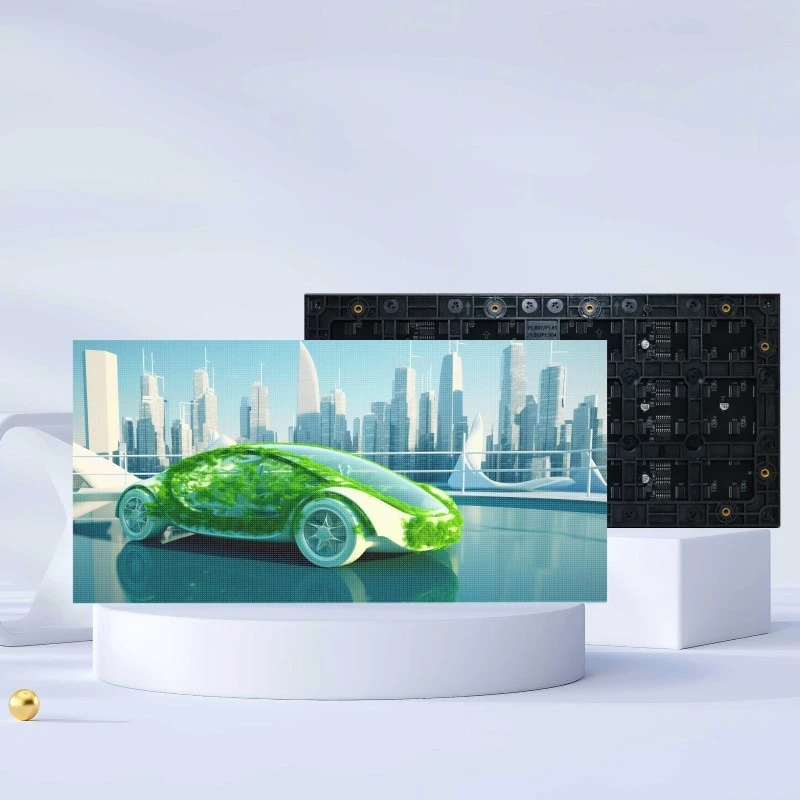

Transparent screens, a breakthrough in display technology, combine display units such as LCD, LED, or OLED with a transparent substrate, achieving the dual functions of a display screen and a transparent window. Their core technology relies on optical optimization and material science to deliver clear images while maintaining high light transmittance. Transmittances generally exceed 85%, with some high-end products exceeding 90%. This characteristic allows them to retain the information transmission function of traditional screens while providing unprecedented openness and interactivity.
From a practical perspective, transparent screens are redefining the very nature of commercial displays. Retailers are leveraging their transparency to display products alongside dynamic advertising, achieving "unobstructed marketing." Museums and exhibition halls are using transparent screens to recreate the 3D structure of cultural relics or historical scenes, protecting exhibits while enhancing the sense of immersion. In architecture, transparent screens are being integrated into glass curtain walls to create dual-mode displays: during the day, they function as ordinary glass for daylighting, while at night, they transform into giant transparent displays displaying city promotional content. Of particular note is the development of transparent in-vehicle navigation systems, which project road information directly through the windshield, significantly reducing the risk of driver distraction.
Current technology still faces challenges such as brightness degradation, limited viewing angles, and high costs, but breakthroughs in new materials like MicroLED are driving the evolution of solutions. As the 5G+ IoT ecosystem matures, transparent screens may be deeply integrated with sensors and AI systems, evolving into intelligent interfaces that combine information display, environmental perception, and user interaction. This technology not only expands the visual dimension of the digital age but also becomes a transparent bridge connecting the physical and digital worlds, heralding a new era of human-computer interaction where the virtual and the real coexist.