

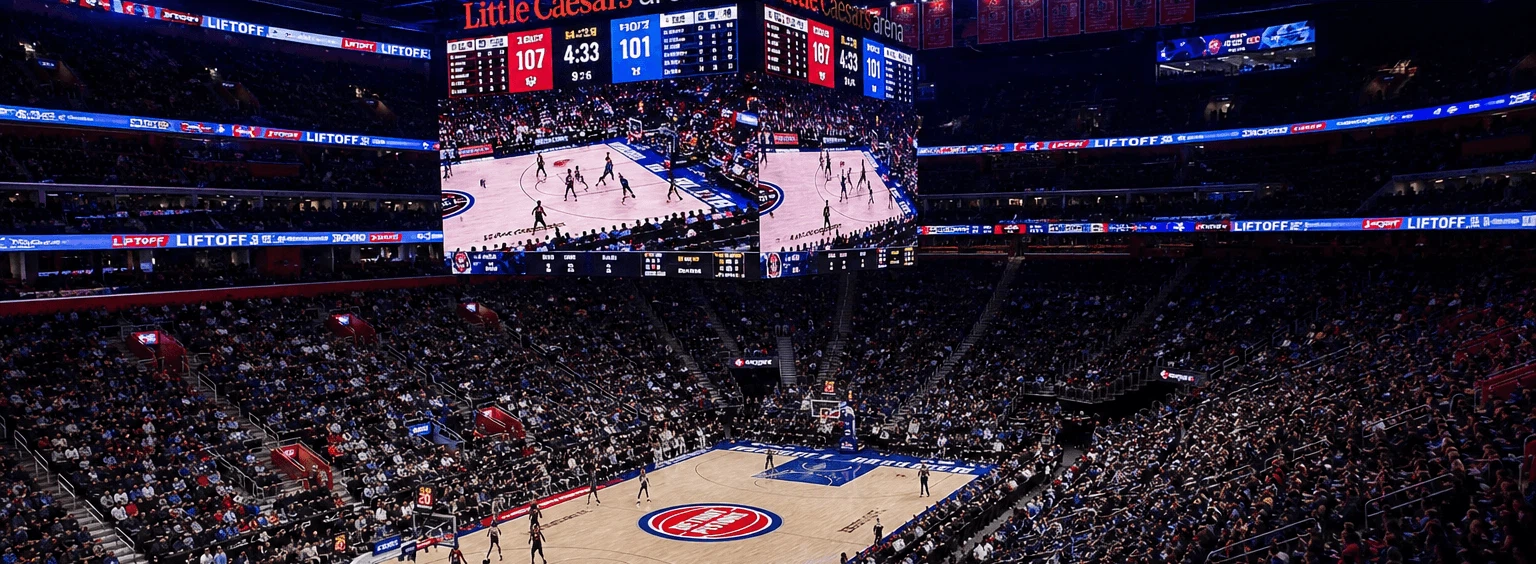
In sports venues, image smoothness is often more important than simply increasing brightness or reducing pixel pitch.
Many indoor arenas today are no longer used only for live spectators. They also serve as:
- livestream venues
- broadcast environments
- social media content spaces
- commercial advertising platforms
Because of this, refresh rate has become one of the more important specifications in sports arena LED screen projects.
For example, during basketball games or esports tournaments, cameras continuously capture:
- fast player movement
- replay transitions
- audience reactions
- dynamic sponsor advertisements
If the LED display refresh rate is too low, camera footage may show:
- horizontal scan lines
- flickering
- unstable brightness
- image tearing during slow motion replay
This is why many indoor arena projects now prioritize ≥3840Hz refresh rate LED systems.
For esports venues and professional broadcasting environments, some projects even adopt higher refresh rate configurations to improve camera synchronization performance.
As a China sports arena LED screen manufacturer, we increasingly notice that overseas contractors now ask about:
- refresh rate
- grayscale performance
- camera shooting compatibility
- earlier than they ask about cabinet structure.
This reflects how sports arena LED displays are gradually shifting from "display equipment" toward integrated broadcast infrastructure.
Indoor Sports Venues
Traditional indoor scoreboards mainly displayed:
- scores
- timers
- team names
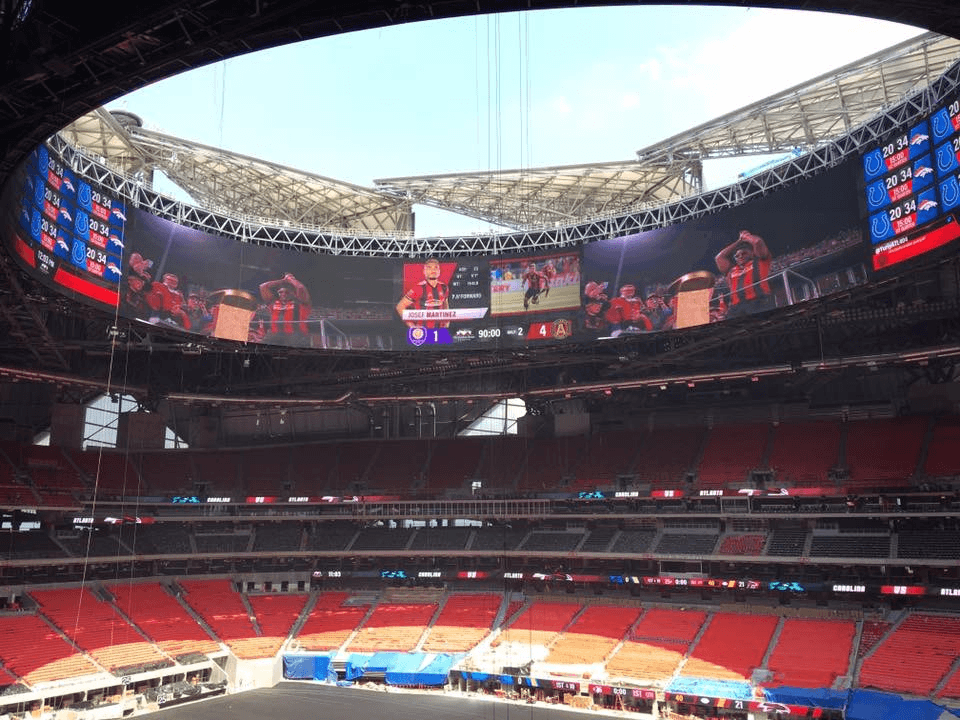
However, modern sports arenas increasingly prefer center-hung LED scoreboard systems capable of:
- replay broadcasting
- sponsor advertising
- audience interaction
- dynamic match presentation
This trend is especially visible in:
- basketball arenas
- esports venues
- university gymnasiums
- multi-purpose indoor stadiums
Compared with wall-mounted displays, center-hung LED scoreboards provide better visibility across multiple seating sections.
Many venues now combine:
- cube LED scoreboards
- ribbon LED displays
- perimeter fascia screens
- into one integrated visual system.
Several arena projects associated with NBA teams use this type of multi-screen arena display structure for both sports presentation and commercial media operation.
Why LED Ribbon Displays Are Popular in Modern Arenas
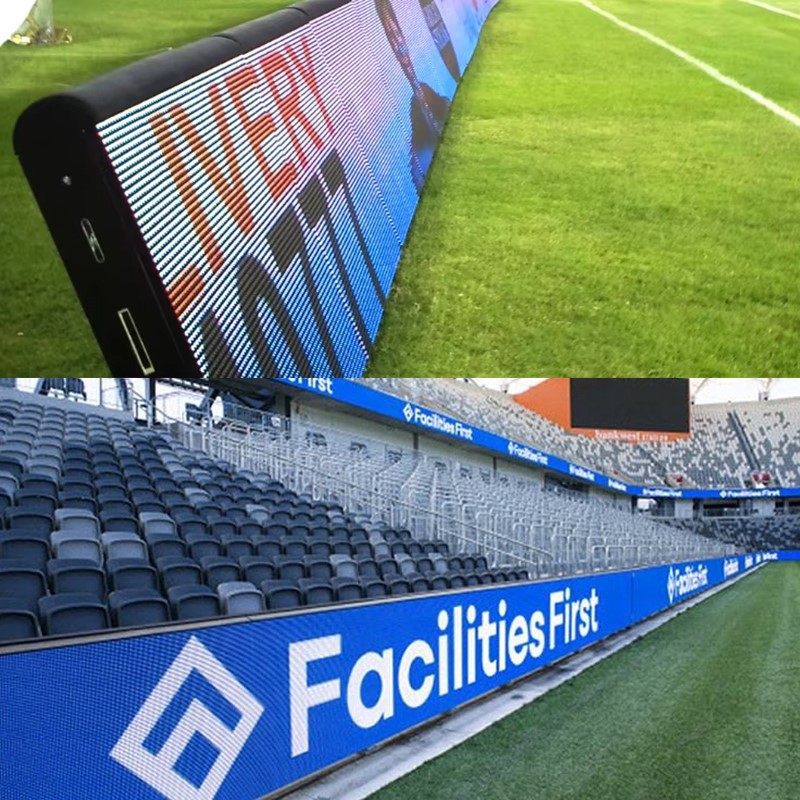
LED ribbon displays are long horizontal LED screens commonly installed around arena seating sections.
Unlike large center scoreboards, ribbon displays are mainly used for:
- sponsor advertising
- match branding
- audience prompts
- dynamic event visuals
One reason ribbon LED displays are increasingly common in sports arenas is their ability to keep advertising visible throughout the event without blocking audience sightlines.
They are widely used in:
- basketball arenas
- hockey stadiums
- esports venues
- indoor concert halls
Compared with static printed banners, digital ribbon displays allow venue operators to switch sponsors and advertising content in real time.
For commercial sports venues, this creates more flexible sponsorship management opportunities.
This is also why many system integrators now search specifically for:
- indoor ribbon LED display
- arena fascia LED screen
- customized sports arena advertising display
- rather than only searching for standard indoor LED video walls.
Although both products use indoor LED technology, sports arena LED screens are usually designed differently from conventional conference or retail LED displays.
| Sports Arena LED Screen | Conventional Indoor LED Display |
|---|---|
| Designed for long viewing distance | Designed for close viewing |
| Supports live broadcasting | Mainly advertising use |
| Large suspended structures | Wall-mounted installation |
| Higher refresh rate demand | Standard refresh rate |
| Multi-signal integration | Simple content playback |
For arena projects, factors such as:
- structural load
- signal synchronization
- camera compatibility
- venue operation time
often become more important than ultra-fine pixel pitch.
This is why many customized sports arena LED display projects require earlier engineering coordination compared with standard indoor advertising screens.
Sports Arena LED Systems Are Increasingly Used Beyond Sports
One visible trend in recent years is that many indoor arenas are becoming multi-purpose venues rather than single-use sports halls.
Outside sports seasons, many venues are now used for:
concerts
- esports competitions
- graduation ceremonies
- commercial exhibitions
- corporate events
Because of this, arena LED systems increasingly require:
- flexible signal input
- stable long-hour operation
- quick content switching
- compatibility with event production systems
For venue operators, this improves space utilization throughout the year while increasing commercial return from arena infrastructure investments.